Relationship Botany
A Pixel-Art Personality Quiz Exploring Attachment Styles
Overview
Psychology and self-discovery can often feel clinical or intimidating. Built during a 3-hour Mini Figma Hackathon, this project aimed to make understanding your attachment style accessible, delightful, and highly shareable. By leaning into the universal metaphor of plant care, Relationship Botany is an interactive, mobile-first prototype that dynamically maps your relationship needs to the perfect houseplant.
Design & UX Strategy
To move from concept to a polished MVP under three hours, I focused on high-impact visual storytelling and seamless prototyping:
Cozy Indie Aesthetic: Designed entirely with a cohesive 2D pixel-art style. The UI utilizes an earthy, calming palette of sage greens and terracotta oranges to create a warm gaming environment.
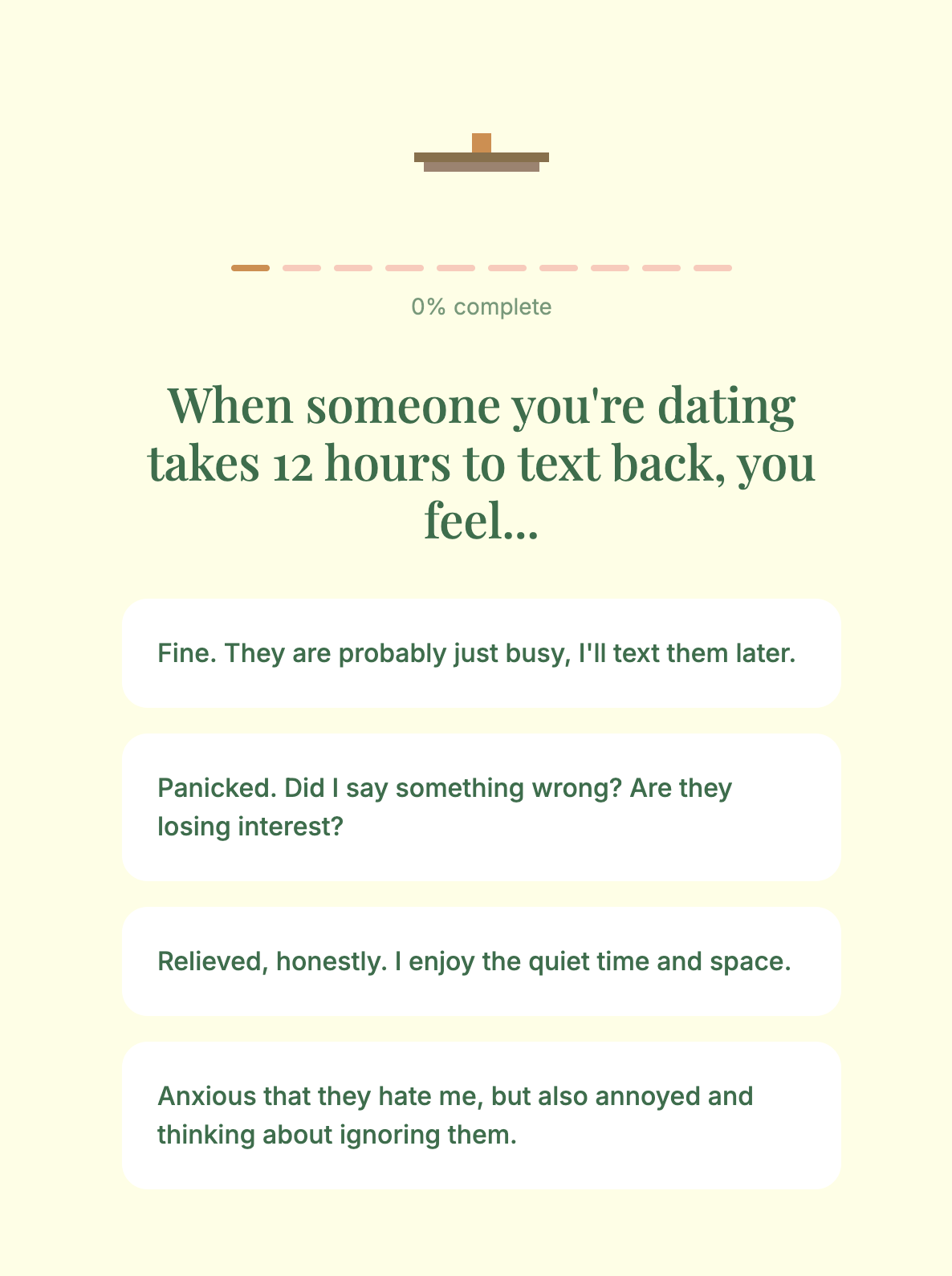
Dynamic Storytelling: Instead of a standard progress bar, the quiz features a dynamic plant avatar. Utilizing Figma’s Smart Animate, a tiny pixelated seed smoothly sprouts, grows a stem, and forms a bud as the user advances through the 10 questions.
Tactile Micro-Interactions: Built custom master components for the answer cards featuring distinct Hover and Pressed states to give the user satisfying visual feedback.
The Botanical Matches
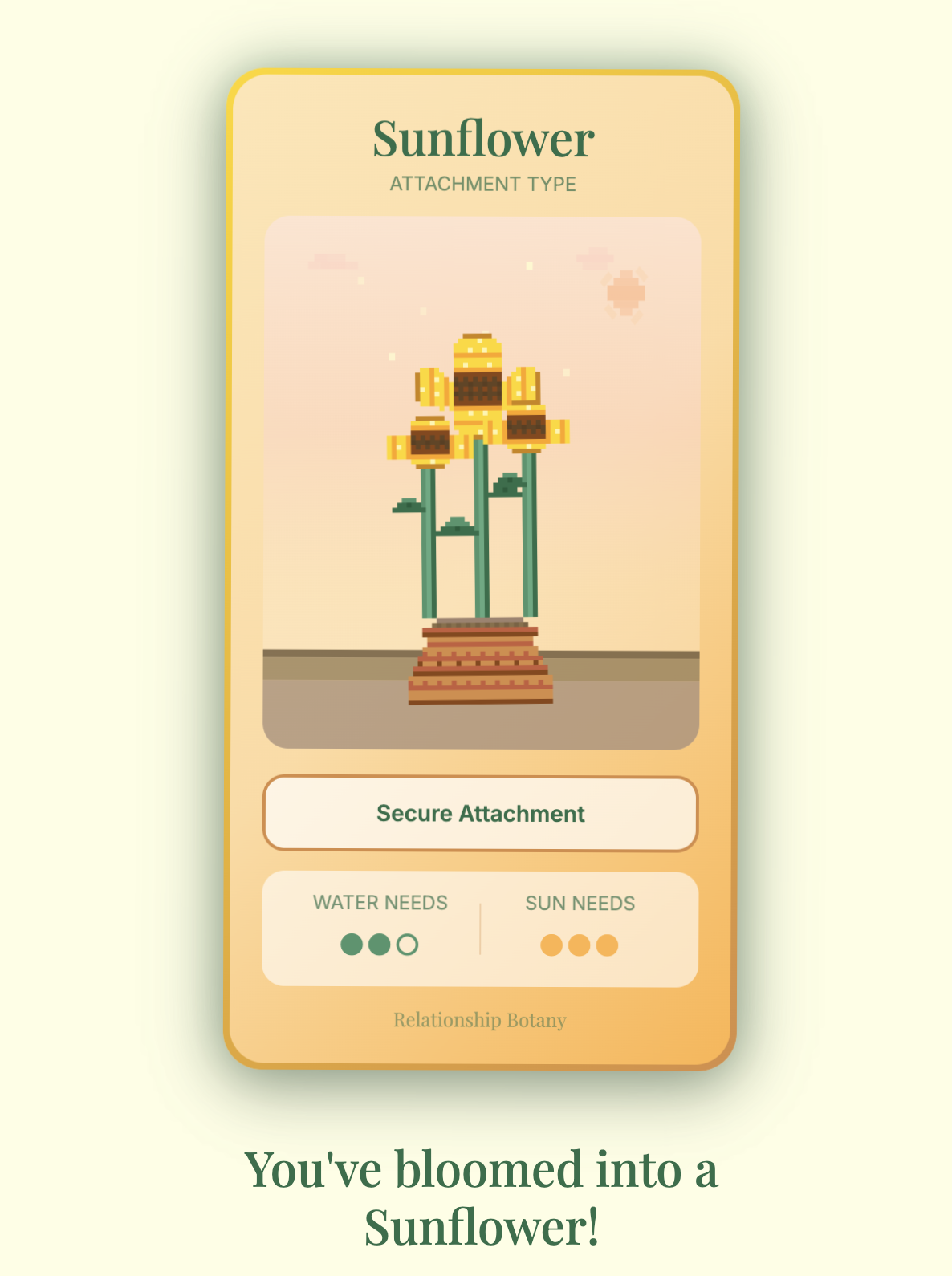
The quiz runs on a “Majority Rules” logic engine, assessing situational relationship questions to generate one of four results:
- The Sunflower (Secure): Resilient, deep-rooted, and naturally turns toward the light.
- The Fern (Anxious): Beautiful and caring, but highly sensitive and requires a consistent, reassuring environment.
- The Cactus (Avoidant): Fiercely independent, self-reliant, and needs plenty of space to thrive.
- The Orchid (Fearful-Avoidant): Deeply rewarding but complex, requiring a delicate balance of care and boundaries.
Reflection
This was a incredibly fun, fast-paced challenge. Constraining the timeline to just three hours forced me to prioritize the core user experience, leverage Figma AI for rapid asset generation, and focus on the micro-interactions that make a prototype feel like a fully coded product.