Smart Amazon Product Query Assistant
Building a Hybrid RAG System with Llama 3.1 and FAISS
Overview
Navigating thousands of product reviews can be overwhelming for hobbyists and makers. Using a subset of the Amazon 2023 Reviews Dataset, this project focuses specifically on the Arts and Crafts category, encompassing over 16,000 unique products. I transformed this specialized dataset into an interactive AI shopping assistant using Retrieval-Augmented Generation (RAG), allowing the system to answer nuanced questions about supplies, compatibility, and user experiences grounded in real-world review data.
Technical Architecture
1. Optimized Storage & Hybrid Search
To ensure high-speed performance, the processed dataset was stored in Apache Parquet format. This columnar storage choice allows for efficient metadata filtering and faster loading of the 16,000-product subset.
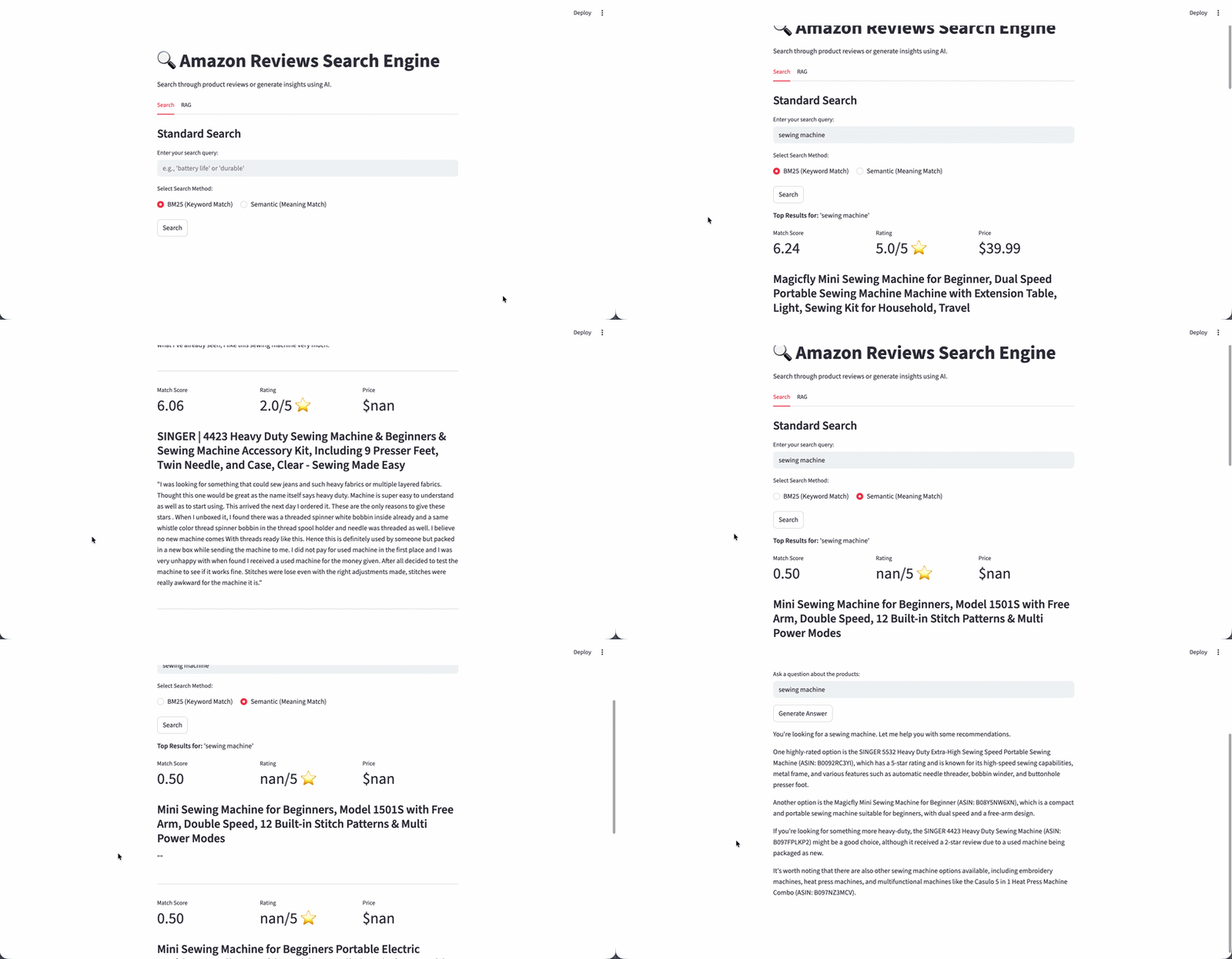
The retrieval engine utilizes a Hybrid Search approach:
- Lexical (BM25): Catching specific craft jargon and brand names.
- Semantic (FAISS): Understanding contextual intent via
sentence-transformers.
2. The Retrieval Engine (Hybrid Search)
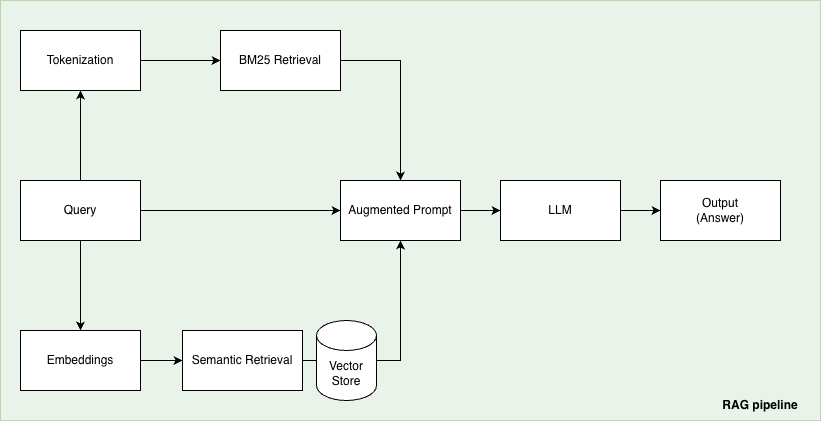
To ensure the most relevant results, I implemented a dual-path retrieval strategy:
- Lexical Search (BM25): A keyword-based engine using a custom tokenizer to catch specific product names and technical craft terms.
- Semantic Search (FAISS): A dense vector database using
sentence-transformers(all-MiniLM-L6-v2). This allows the system to understand intent (e.g., searching for “supplies for a 5-year-old” even if the word “supplies” isn’t in the description). - Ensemble Approach: The final system uses a Hybrid Retriever, combining both methods to balance keyword precision with contextual meaning.
3. The RAG Pipeline
Using LangChain and the Groq Llama-3.1-8b model, I developed a generative pipeline that:
- Context Grounding: Passes the top-retrieved products/reviews into the LLM.
- Hallucination Prevention: Utilizes custom prompt engineering to force the model to rely strictly on the provided dataset and cite specific ASINs for transparency.
- Summarization: Synthesizes hundreds of words of review text into a concise, natural-language recommendation.
4. Deployment
The application is built with Streamlit and deployed via Posit Connect Cloud. It features a dual-mode interface allowing users to switch between a traditional “Search” view and the “AI Assistant” RAG mode.
Key Takeaways
- Vector Databases: Gained hands-on experience with FAISS for efficient high-dimensional similarity search.
- Data Engineering: Processed and joined large-scale Amazon metadata and review sets, handling missing values and mismatched keys through strategic joins.
- Prompt Engineering: Developed robust templates to ensure the LLM remains a “faithful” assistant to the data.
Collaborator: Built with Nicole Link. View Source Code on GitHub